2026 Harvest in Burgundy: An Early, Sun-Drenched Vintage Under Close Watch
The 2026 harvest in Burgundy made its mark well before the first crates of grapes even reached the wineries. Following an early spring and a summer marked by several spells of intense heat and drought, the region’s vineyards saw an exceptionally early harvest schedule.
Once again, Burgundy demonstrates just how much the climate shapes the vintage. Yet, behind these historic dates lies a genuine challenge for winemakers: harvesting at the precise moment to preserve the balance that defines the character of the region’s great Chardonnays and Pinot Noirs.
One of the Earliest Harvests in History
The tone was set as early as August 8, 2026, with the first pickings of grapes destined for Crémant de Bourgogne. This date marks a new record for earliness, surpassing the previous record set in 2022, when the harvest began on August 13.
The schedule accelerated for still wines as well. Harvesting of the first Chardonnays began around August 17 in several areas, quickly followed by the Pinot Noirs. Across the vineyard region, this earliness is particularly striking when compared to historical harvest dates in Burgundy.
This trend is nothing new. Historical studies on the harvest in Beaune show that between the late Middle Ages and 1988, the red wine harvest took place, on average, around September 27. Since the late 1980s, the schedule has accelerated significantly, with harvests now regularly taking place in August or at the very beginning of September.
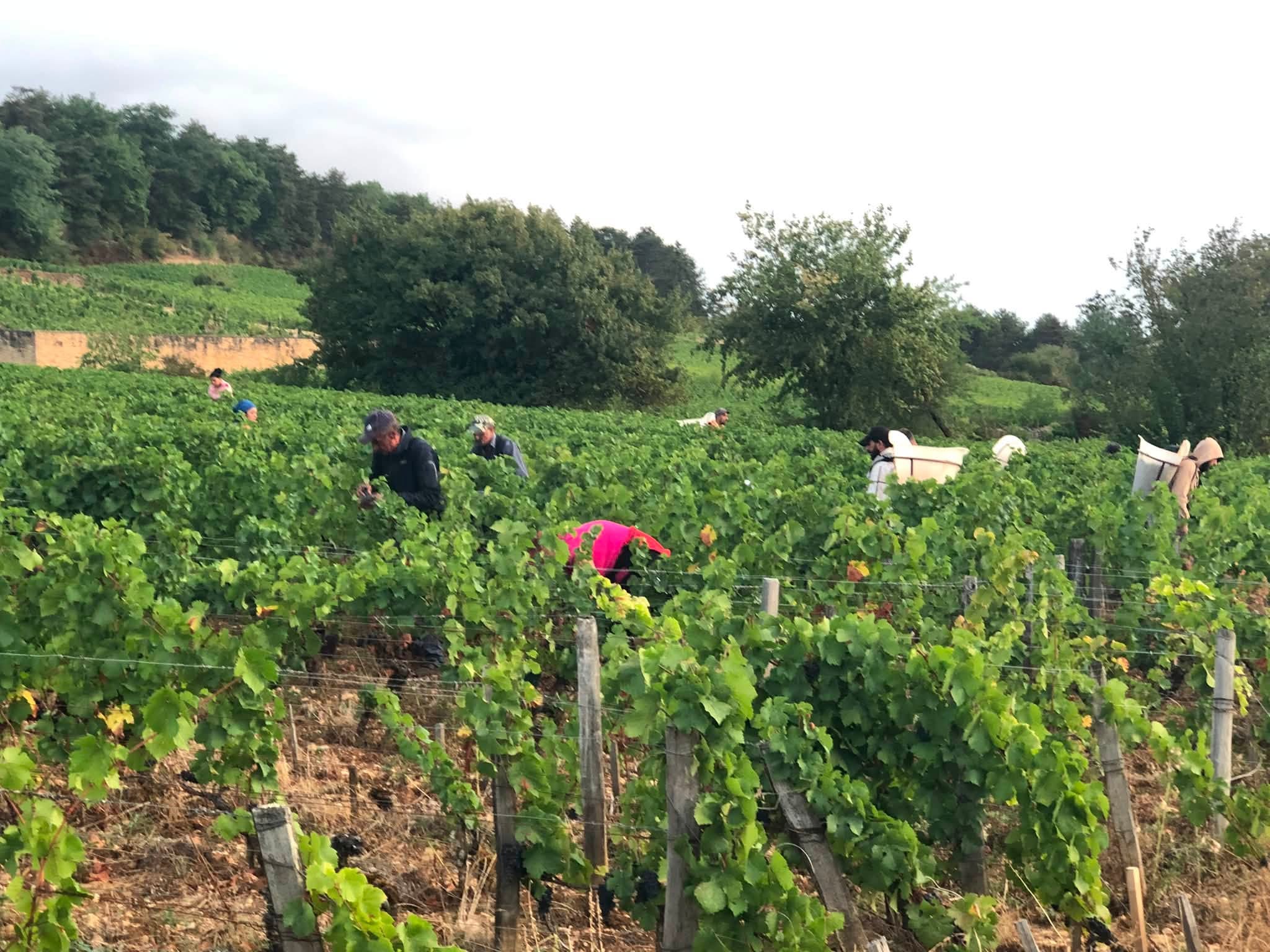
2026: An early start in the vineyards
The early harvest is due to a growing cycle that was itself significantly ahead of schedule. A mild, wet winter spurred the vines into rapid early growth starting in March. The mid-budburst stage was observed around March 28—a date comparable to that of the very early 2020 vintage.
However, spring was not without its challenges. Several cold snaps and frost events affected certain areas, particularly in the Chablis, Grand Auxerrois, and Châtillonnais regions. Rapid vegetative growth in April then further accelerated the vines’ development.
Then, the summer changed the picture. Heatwaves and drought placed significant stress on the vines. In some sectors, water shortages caused temporary stalls in ripening, followed by a sharp acceleration as harvest approached.
Small, concentrated grapes… and constrained volumes
A key characteristic of the 2026 harvest is the small size of the berries. Water scarcity limited their expansion, resulting in projected low yields across many vineyard plots. Burgundy professionals are anticipating a harvest with a particularly low total volume.
Yet, this situation may offer a qualitative upside: smaller berries can exhibit high concentration. This is one of the paradoxes of the 2026 vintage: the harvest might be quantitatively disappointing while yielding rich, ripe grapes.
However, we must wait for vinification and the first tastings from the tanks to accurately gauge the vintage’s potential. In Burgundy, a difference of just a few degrees or a few grams of acidity can significantly alter a wine’s final style.
The major challenge of 2026: preserving freshness
This is likely one of the most closely monitored aspects this year.
Both Chardonnay and Pinot Noir are closely linked to freshness, tension, and precision. However, following such a hot, dry summer, winemakers must carefully monitor the evolution of sugar levels, acidity, and grape ripeness.
Grapes that ripen too quickly can reach high sugar levels while the acid balance evolves differently. Choosing the harvest date therefore becomes crucial: waiting longer to gain ripeness may also mean risking the loss of some of that sought-after freshness.
That is why sampling and tasting the berries played a vital role throughout August. In Burgundy more than anywhere else, harvesting isn’t simply a matter of a set date; it happens when the grape’s balance feels right.
A Burgundy that adapts
The 2026 vintage also illustrates a reality that has become unavoidable for Burgundy estates: adapting to climate change is now part of daily life.
Pruning dates, canopy management, soil cultivation, rootstock selection, grape protection, team organization, and harvest speed—every decision can impact the vintage’s profile.
Early ripening is therefore no longer just a curiosity; it is becoming a structural factor that winemakers must contend with. The Burgundy Committee itself notes a marked shift in recent years, with vintages diverging increasingly from historical averages in terms of both harvest dates and yields.
What style for the 2026 vintage?
It is still too early to deliver a definitive verdict, but initial indications are already beginning to shape the profile of the vintage.
2026 promises to be a sunny, early-ripening vintage characterized by concentration and likely limited yields. The wines may display great richness and substance, yet the challenge will lie in retaining enough freshness and tension to preserve the balance and elegance characteristic of Burgundy’s great terroirs.
As for the reds, Pinot Noir could yield generous, deeply colored wines, with a structure bolstered by the small size of the berries. For the whites, Chardonnay may express significant ripeness, requiring careful attention to acidity and aromatic precision.
As always in Burgundy, terroir will make the difference. Plots with deep soils, those capable of retaining moisture, and vines with good water reserves may well stand out from areas most exposed to drought.
2026: a vintage to watch closely
The 2026 harvest will likely go down as one of the earliest ever recorded in Burgundy. Yet beyond the calendar record, this vintage primarily reflects the evolution of the vineyards in the face of an increasingly volatile climate.
After contending with frost, heat, and drought, winemakers faced a particularly narrow harvest window. The challenge was simple to state but tricky to execute: finding the moment when the grapes had achieved sufficient ripeness without losing that touch of freshness that gives Burgundy wines their nobility.
The coming weeks will now be dedicated to vinification. It is in the winery and the cellar that the true character of the 2026 vintage will be revealed.
One thing is already certain: this harvest will mark another significant milestone in the climatic history of Burgundy’s vineyards. 2026 may not be a record-breaking vintage in terms of volume. But it could well be one that once again demonstrates the resilience and expertise of Burgundy’s winemakers.